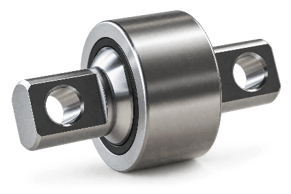
Custom Torque Rod Bushings for Heavy-Duty OEM Applications
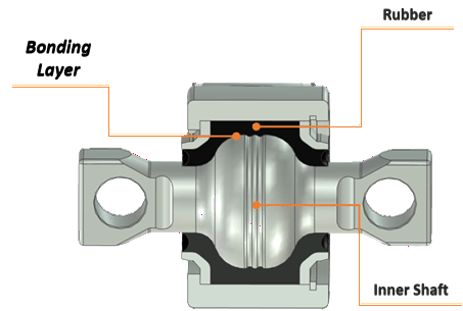
Torque rod bushings absorb vibration and road shock while controlling axle movement in commercial vehicles. Conventional rubber bushings with a bonding layer can experience torsional and alternating shear stresses during suspension movement, which can lead to rubber tearing and bushing extrusion.
CCTY’s rotational torque rod bushings are designed to reduce these stresses while providing easier installation, lower rotational torque and long-term durability. The engineers at CCTY work with OEMs to design torque rod bushings for individualized suspension requirements and specific loads and articulation.
What is a Torque Rod Bushing?
Also known as a straddle bearing, a torque rod bushing is a suspension component that connects upper and lower control arms to the vehicle chassis while allowing controlled movement between the components. Torque rod bushings help to maintain axle position and accommodate suspension movement in commercial trucks and heavy-duty vehicles.
Torque Rod Bushing Applications
Torque rod bushings are used in suspension systems for commercial trucks, buses and heavy-duty vehicles. They are also found in specialized motion control, such as the entryway kneeling function in city buses.
Straddle Bearing Failure
Conventional bonded rubber straddle bearings are subjected to significant torsional and shear forces as the suspension moves. When the rubber twists during operation, it generates a rebound force that creates shear stress in the bonding layer between the rubber and inner shaft.
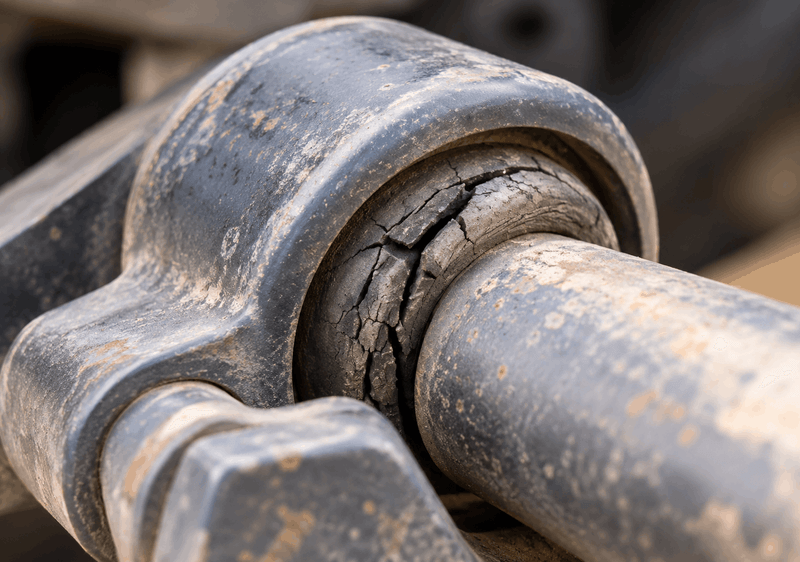
Over time, repeated torsional loading and alternating shear stress can cause cracks to develop in the rubber. As the cracks slowly tear the material, the rubber can start to separate from the inner shaft, resulting in loss of stiffness and eventual extrusion from the housing.
CCTY Introduces Rotational Torque Rod Bushings
To alleviate stressors on the staddle bearing, CCTY designed a rotatable torque rod bushing that eliminates torsion and alternating shear stress on the rubber, which avoids rubber tearing and extrusion failure. The rotatable design with proprietary friction material allows the inner shaft to rotate independently, helping eliminate the initial torsional angle created during installation and reducing stress on the rubber.
The design also allows for:
- Easier installation
- Reduced torsion angle after installation
- Lower breakaway/rotating torque
- Maintenance-free operation
- Longer service life
FAQs
What is a torque rod bushing?
A torque rod bushing connects the torque rod to the axle or chassis and allows controlled suspension movement while helping control axle position and absorb vibration.
What does a torque rod bushing do?
Torque rod bushings allow controlled articulation between the torque rod and its mounting points while absorbing vibration and helping maintain proper axle alignment.
What causes conventional torque rod bushing failure?
Common causes include repeated torsional and shear loading, rubber fatigue, bond separation, excessive articulation, improper installation and harsh operating conditions.
What makes CCTY’s straddle bearings unique?
In a conventional straddle bearing design, rotational torque increases with the rotational angle. CCTY’s rotational design provides constant rotational torque, resulting in less wear and larger load capacity.
What are the signs of a bad torque rod bushing?
Signs can include excessive suspension movement, vibration, clunking or knocking noises, axle misalignment, uneven tire wear and visible rubber cracking, tearing or separation.
Are torque rod bushings the same as straddle bushings?
Yes. They are terms used interchangeably.
Can torque rod bushings rotate?
Yes. Rotational torque rod bushings are designed to allow controlled rotation between the inner shaft and surrounding components. CCTY’s rotational design reduces torsional stress in the rubber and eliminates the initial torsional angle after installation.
Can different-sized straddle bearings be used on the same axle?
Yes. Due to load differences between upper and lower ball joints, it is common to have different size straddle bearings on the same axle.
Rotational Bushing Comparision
| Feature | Conventional Rubber Bushing | CCTY Rotational Bushing |
| Inner shaft rotation | Limited by rubber and bonding layer | Rotatable |
| Initial torsional angle | Can occur during installation | Can be eliminated |
| Installation | Requires attention to orientation | Easier installation |
| Maintenance | Regreasing required | Maintenance-free friction material |