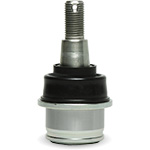
CCTY is an OEM ball joint manufacturer specializing in standard and application-specific ball joints for steering, suspension and motion-control systems. CCTY works with OEM engineering teams to develop ball joints around application requirements including load, torque, articulation, packaging, materials, sealing and operating environment.
Ball joints are manufactured for applications including recreational vehicles, agricultural equipment, construction and mining equipment, automotive systems and other mobile machinery.
Choosing a Ball Joint Manufacturer
Selecting a ball joint manufacturing partner involves more than matching dimensions. The manufacturer must be able to consistently control the materials, geometry, heat treatment, torque, sealing and production processes that affect ball joint performance and service life.
OEM engineers evaluating a ball joint manufacturer should consider:
- Quality certifications and manufacturing controls
- Material selection and heat treatment
- Torque and clearance control
- Ball stud and housing design
- Sealing and lubrication
- Corrosion protection
- Testing capabilities
- Custom engineering capabilities
- Production capacity and supply-chain support
Quality & Manufacturing Controls
When choosing a manufacturer, look for ISO 9001 and TS 16949. Both of these certification programs verify that the manufacturer has a series of processes that are strictly followed to provide consistent products. These quality management systems are designed to emphasize continual improvement, defect prevention and the reduction of waste. CCTY is TS 16494 and ISO 9001 certified.
TS 16949 is specific to the automotive industry
ISO 9001 branches across industries
Ball Joint Material Selection, Heat Treatment & Production
The ball joint manufacturing environment uses a range of skills, materials and procedures. Since ball joints perform a crucial function in harsh environments, it is important that they be manufactured to the highest standards.
A ball joint’s body and ball should be manufactured using high quality alloy steel. These parts then undergo through hardening to provide reliable performance.
The inner materials should be tailored to specific torque ratings. Each ball joint from CCTY is unique in design, made to fit a specific application. It is important to work with a manufacturer who understands how to eliminate tolerance stack up so that the end user is not inconvenienced with a ball joint malfunction.
A rubber seal or boot covers that stud and ball, and the amount of grease is maximized.
Ensuring a Long Service Life
A number of factors go into producing a ball joint that has a long service life. Below are the parameters that your manufacturer should follow:
- Corrosion resistance – Ball joints work in rough environments. In order to perform in elements that include salt, water and corrosive materials, ball joints need to be corrosion resistant. Oftentimes, the manufacturer will add a coating to help maintain a long-life ball joint. A strong seal will also prevent egress to dirt and salt, expanding the life of the ball joint.
- Ability to perform in high-temperature conditions – Heat can cause damage to any ball joint. Ball joints used in off-road or automotive applications must perform in high temperature conditions. Heat treatment to steel, fitting rubber boots and solid construction help ball joints withstand damage from heat.
- Reduction in tolerance stackup – Tolerance stack up can cause the ball joint to freeze or become too loose. Manufacturers who use injection molding eliminate tolerance stackup.
- Even Torque – Ball joints must operate with forces coming from a variety of direction. The ball joint must maintain torque to ensure accurate steering and smooth operation.
CCTY combines engineering, manufacturing and testing capabilities to develop ball joints around the performance requirements of the OEM application.
Ball Joint Testing Capabilities
CCTY evaluates ball joint performance using testing appropriate to the design and application. Available ball joint testing capabilities include:
- Boot fatigue test.
- Fatigue tests for wear life.
- Axial and radial clearance.
- Ultimate load test of the ball stud.
- Ultimate push and pull out strength.
- Rotational torque and breakaway torque measurement.
- Material testing.
- Rivet area sealing test.
Ball Joint Manufacture FAQs
Do ball joints need to be greased?
Some brands require periodic greasing. CCTY’s ball joints are greased for life, meaning that they are maintenance-free.
What’s the difference between an upper ball joint and lower ball joint?
Ball joints are part of the suspension that work within the chassis system. Generally, both ball joints do the same thing, however, one of the ball joints always has a lot more load than the other. The higher load ball joint is the one that is connected to the a-arm with the shock. The orientation and ball joint type can vary by the manufacturer design.
How do I know if a ball joint has gone bad?
A faulty ball joint will prevent the car from maintaining wheel alignment, which will become noticeable as uneven wear on the tires. When steering the car, the driver may notice vibration or that they have to turn the wheel a bit further to overcome excess looseness in the suspension. Sometimes a bad ball joint can be heard rattling.
What causes a ball joint to fail?
The environment ball joints work under includes salt, dirt and grime. Abrasive particles can get into the boot – or seal – if it does not fit properly or if it’s cracked. Driving under harsh conditions, such as bumpy or uneven roads, hard breaking and aggressive driving add to decay. This video will show you the inside of a ball joint.
Should the ball stud move freely?
The ball joint stud should freely pivot in the housing, yet be firm. It should not be able to plunge up and down within the housing.
Where are Ball Joints Used?
| Market | Typical application |
|---|---|
| Recreational vehicles | ATV/UTV steering and suspension |
| Agriculture | Steering and suspension linkages |
| Construction/mining | Heavy-duty steering and suspension |
| Automotive | Chassis and suspension |
| Lawn & garden | Steering/linkage systems |