
Choosing a Plain Bearing Manufacturer
Choosing the right plain bearing manufacturer is a decision that directly impacts product performance, lifecycle cost, and reliability. While many suppliers offer catalog parts, the real differentiator lies in engineering capability, material expertise, and the ability to tailor solutions to your design’s exact application. For OEMs in demanding environments like automotive and agriculture, partnering with a manufacturer like CCTY can significantly improve outcomes.
Look Beyond Standard Catalog Offerings
A plain bearing manufacturer should offer more than off-the-shelf components. While standard sizes are useful, real-world applications often require adjustments in materials, tolerances, or lubrication strategies. CCTY is known for combining a deep catalog with customization capabilities, working closely with engineers to optimize performance from concept through production.
This is especially important when transitioning from metal-to-metal designs to self-lubricating bushings or when space constraints demand non-standard geometries.
Evaluate Material and Design Expertise from Your Plain Bearing Manufacturer
Not all bushings are created equal. The best manufacturers offer a wide range of material combinations tailored to different operating conditions.
- PTFE-lined bushings for low-friction, self-lubricating performance
- Polymer (POM) composite bushings for cost-effective, maintenance-friendly solutions
- Metallic bushings for high-load and high-torque applications
Within these categories, look for product variations engineered for dry, oil, grease, or linear motion environments. This range allows engineers to match the bearing design exactly to load, speed, and environmental conditions rather than forcing a compromise.
Consider Application-Specific Product Lines
A strong plain bearing manufacturer should demonstrate expertise across multiple applications, not just generic components. A broad range of bushing product lines, including:
- Belt tensioner bushings
- Seat bushings
- Shock absorber bushings
- Dual mass flywheel bushings
- Torque converter bushings
- Windshield wiper bushings
Engineered with specific motion profiles, load conditions, and durability requirements in mind., product-specific bearings are specially designed for long life in their applications. For example, shock absorber bushings must handle linear motion and vibration, while torque converter bushings operate in oil-lubricated rotational environments.
Prioritize Engineering Support and Collaboration
The best outcomes occur when the manufacturer acts as an engineering partner, not just a supplier. Look for a manufacturer with collaborative design process, assistance with material selection and the ability to incorporate performance-enhancing features such as coatings or heat treatments.
This level of support is especially valuable during prototyping, where delays in validation testing can impact entire development timelines.
Assess Performance Capabilities
Plain bearings must perform under a wide range of conditions, including extreme temperatures, contamination, and high loads. Choose a manufacturer with bushings designed for:
- Low friction and reduced wear
- Long service life
- Operation across dry, grease, and oil-lubricated environments
In industries like agriculture and construction, where exposure to dirt, moisture, and heavy loads is constant, these characteristics are essential for minimizing downtime and maintenance.
Validate Manufacturing and Quality Control
A reliable plain bearing manufacturer should control critical processes in-house, including heat treatment, grinding, and surface finishing. Vertically integrated manufacturing and testing capabilities ensure consistent quality and performance across production runs.
This is particularly important for OEMs that require repeatability at scale.
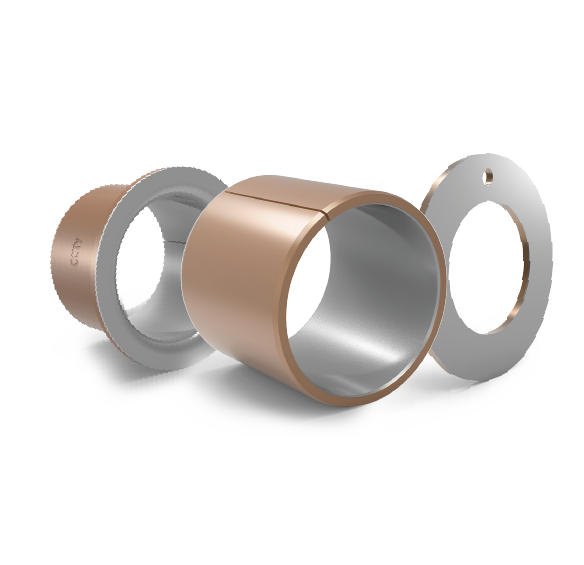
Choosing the right plain bearing manufacturer is about more than price: it’s about performance, partnership, and long-term reliability.